
As I have said before, we have a significant number of appointed Congressmen/women that have turned into CEOs and their biggest concern is money.
Report: 237 millionaires in Congress
By: Erika Lovley
November 6, 2009 12:00 PM EST
Talk about bad timing.
As Washington reels from the news of 10.2 percent unemployment, the Center for Responsive Politics is out with a new report describing the wealth of members of Congress.
Among the highlights: Two-hundred-and-thirty-seven members of Congress are millionaires. That’s 44 percent of the body – compared to about 1 percent of Americans overall.
CRP says California Republican Rep. Darrell Issa is the richest lawmaker on Capitol Hill, with a net worth estimated at about $251 million. Next in line: Rep. Jane Harman (D-Calif.), worth about $244.7 million; Sen. Herb Kohl (D-Wis.), worth about $214.5 million; Sen. Mark Warner (D-Va.), worth about $209.7 million; and Sen. John Kerry (D-Mass.), worth about $208.8 million.
All told, at least seven lawmakers have net worths greater than $100 million, according to the Center’s 2008 figures.
“Many Americans probably have a sense that members of Congress aren’t hurting, even if their government salary alone is in the six figures, much more than most Americans make,” said CRP spokesman Dave Levinthal. “What we see through these figures is that many of them have riches well beyond that salary, supplemented with securities, stock holdings, property and other investments.”
The CRP numbers are somewhat rough estimates – lawmakers are required to report their financial information in broad ranges of figures, so it’s impossible to pin down their dollars with precision. The CRP uses the mid-point in the ranges to build its estimates.
Senators’ estimated median reportable worth sunk to about $1.79 million from $2.27 million in 2007. The House’s median income was significantly lower and also sank, bottoming out at $622,254 from $724,258 in 2007.
But CRP’s analysis suggests that some lawmakers did well for themselves between 2007 and 2008, even as many Americans lost jobs and saw their savings and their home values plummet.
Senate Minority Leader Mitch McConnell (R-Ky.) gained about $9.2 million. Sen. James Inhofe (R-Okla.) gained about $3 million, Sen. Daniel Inouye (D-Hawaii) had an estimated $2.6 million gain, and Richard Shelby (R-Ala.) gained about $2.8 million.
Some lawmakers have profited from investments in companies that have received federal bailouts; dozens of lawmakers are invested in Wells Fargo, Citigroup, Goldman Sachs and Bank of America.
Among executive branch officials, CRP says the richest is Securities and Exchange Commission Chairwoman Mary L. Schapiro, with a net worth estimated at $26 million.
Secretary of State Hillary Clinton is next, worth an estimated $21 million. President Barack Obama is the sixth-wealthiest, worth about an estimated $4 million. Vice President Joe Biden has often tagged himself as an original blue collar man. The CRP backs him up, putting his net worth at just $27,000.
He’s hardly the worst off.
Rep. Alcee Hastings (D-Fla.), freshman Rep. Harry Teague (D-N.M.), Rep. Jeff Fortenberry (R-Neb.), Rep. John Salazar (D-Colo.) and Rep. Sander Levin (D-Mich.) each a net worth of less than zero, CRP says.
One caveat on those numbers: Federal financial disclosure laws don’t require members to list the value of their personal residences. That information could alter the net worth picture for many lawmakers.
Even so, Levinthal said, “It is clear that some members are struggling financially.
“Over a calendar year, one’s wealth can change drastically. Many peoples’ investments took a nose dive over night in the last year,” he said.
A number of lawmakers are estimated to have suffered double-digit percentage lossed in their net worth from 2007 to 2008. The biggest losers include Kerry, who lost a whopping $127.4 million; Warner lost about $28.1 million; Sen. Dianne Feinstein (D-Calif.) lost about $11.8 million; and Sen. John McCain (R-Ariz.) lost about $10.1 million.
miércoles, 11 de noviembre de 2009

sábado, 7 de noviembre de 2009
"Nuestros enemigos organizan sus fuerzas mediante la potencia del dinero y la autoridad del Estado. Nosotros solamente podemos organizar las nuestras mediante la convicción, mediante la pasión".
"La imaginación es una gran fuerza generalmente subestimada por la Sociedad".
"La revolución social de ninguna manera excluye la revolución politica. Por el contrario, la implica necesariamente, pero imprimiendole un caracter totalmente nuevo; el de la emancipacion real del pueblo respecto al yugo del Estado".
-Bakunin (1814 - 1876)
----------------------------------------------------------------
"Se siente la necesidad de una revolución inmensa, implacable, que venga no solo a cambiar completamente el régimen económico presente, basado en la explotación despiadada, la especulación y el fraude; no solo a invertir la jerarquia politica basada en el dominio de unos cuantos, ejercida por medio de artimañas, intrigas y mentiras, sino tambien a conocer violentamente la sociedad en su vida intelectual y moral, a sacudirla del letargo, a rehacerlos hábitos, a comunicar al medio actual de las pasiones viles y mezquinas el soplo vivificador de las pasiones nobles, los grandes impulsos, los generosos desvelos".
-Kropotkin (1842-1921)
lunes, 2 de noviembre de 2009
¡La Biblioteca Lázaro al Servicio del Pueblo! - Abierta 24 Horas
por Separatista Saturday, Oct. 31, 2009 at 6:28 PM
separatistapr@yahoo.com
Estudiantes de la UPR de Río Piedras pertenecientes a distintos comités de acción de facultades, como Ciencias Sociales, Derecho y Naturales, demostraron desde tempranas horas en la noche del jueves 29 de octubre su compromiso con la educación del país al movilizarse a la Biblioteca Lázaro del recinto riopedrense de forma académica y consciente. Académica y consciente pues su reclamo era como siempre ha sido, uno de vanguardia en defensa del incremento de espacios académicos, mayores derechos para l@s obrer@s, estudiantes y el pueblo trabajador de Puerto Rico. Dentro de esta ocupación pacífica, cuyo objetivo no era el cierre de la biblioteca si no que todo lo contrario la apertura de esta por 24 horas, los mismos estudiantes establecieron medidas de seguridad como el no pintar las áreas de la Biblioteca, el prohibir el acceso a los anaqueles de libros ya pasadas las 12 de la media noche y el inspeccionar todo bulto a la salida de la Biblioteca.

Está ocupación no fue capricho de estos jóvenes pues es mandato de la pasada Asamblea General de Estudiantes ante la verdadera necesidad de centros de estudio para el país a altas horas de la noche. En esta Asamblea General se exigió la designación de una biblioteca que ofrezca servicios a todos los estudiantes del recinto las 24 horas del día. Esta decisión pasó de forma unánime, o sea sin ningún tipo de oposición entre cientos de estudiantes.
Esta actividad tuvo como propósito denunciar el recorte de horario de los servicios bibliotecarios, ya que los espacios de colecciones dentro de la biblioteca Lázaro no funcionan con un plan estructurado para proveerle al estudiantado seguridad de un horario de servicio fijo. Esto es, si no hay un bibliotecario certificado para los turnos de servicio establecido, o se dejan estudiantes asistentes (contratados) haciendo la labor del personal que no se encuentra, o se cierran las colecciones antes del horario que se supone estén abiertas. Además de limitarle al pueblo trabajador los horarios de servicio, les han quitado espacios bibliotecarios a los estudiantes. Ejemplo más reciente de esto lo es el cierre de la reserva de la facultad de ciencias sociales que prestaba servicio a más de 3,000 estudiantes por día. Por esto es que el estudiantado le exige y le exigió a la administración:
1. La descongelación de plazas y la contratación de más personal calificado para ofrecer los servicios bibliotecarios.
2. Que se extiendan los horarios de las bibliotecas comenzando por la instauración de un horario de servicio de 24 horas en la biblioteca Lázaro la cual funge como biblioteca principal.
3. Que se habiliten más espacios de estudio comenzando por la reapertura de la reserva de ciencias sociales, esta vez como una biblioteca de facultad.
La exitosa actividad contó con un número superior a los 60 estudiantes de distintas facultades, no pertenecientes en su mayoría a ninguna organización política o estudiantil. Al caer la noche un grupo de jóvenes de los comités de acción fueron repartiendo propaganda por distintas bibliotecas que cerraban a tempranas horas, lo que logró un mayor número de estudiantes a la hora que la administración intento remover a l@s estudiantes de la ocupación. Esta ocupación también contó con espacios educativos alternativos como lo es el cine foro. En el cine foro expusieron distintos documentales que se relacionan al contexto político en que vivimos por la apertura y desregulación de la empresa privada a través del libre comercio, el precedente del ¨WTO¨ y las APP.
Más allá del justo reclamo estudiantil por mayores espacios de estudio y la descongelación de plazas laborales, está el ¨issue¨ de la seguridad. Este último problema que aqueja al país y a la universidad fue traído por un mismo supervisor de la guardia universitaria quien planteo que al tener un área designada como la Lázaro con un horario más flexible o de 24 horas, disminuiría el problema de la criminalidad dentro del Recinto. Como es sabido por muchos a altas horas de la madrugada hay estudiantes en las facultades de Naturales, Arquitectura, Educación, etc… estudiando con muy poca iluminación y un mínimo de seguridad, sobre todo a la hora de caminar a su vehículo. Tener una biblioteca en la que el pueblo y el estudiantado pueda accesar al internet o estudiar de manera grupal o individual beneficia la seguridad de los mismos. Una ex alumna de la institución al enterarse de la manifestación reclamo: ¨....si eso hubiese ocurrido mientras yo estudiaba, no hubiese tenido que caminar a medianoche pa mi hospedaje, y no hubiese sido asaltada a punta de pistola!¨
A eso de las 4am la Administración buscó ¨negociar¨ la salida de sobre 40 estudiantes. La rectora ilegítima e interina Ana R. Guadalupe, envío a la Dra. Ivonne Moreno Velázquez, Decana de Estudiantes Interina a hacer el trabajo sucio y negociar la salida del estudiantado presente en la ocupación. Como nos podemos percatar ambas son interinas o sea que ocupan el puesto de chiripa y sin el consentimiento legítimo de la comunidad universitaria, como fue demostrado por el repudio unánime del estudiantado en la pasada Asamblea General de Estudiantes. Si realmente la rectora estaba abierta al diálogo, ¿por qué envió a otra a hacer el trabajo sucio y NUNCA se presentó ella en persona? Si realmente está abierta al dialogo y le interesa el provenir de la universidad, ¿por qué nunca planteo negociar primero sobre los problemas que aquejan al estudiantado, sin tener que privarle el derecho a su espacio de estudio que habían ganado l@s estudiantes de la ocupación? El estudiantado no se dejó intimidar y continuó con la ocupación hasta que entraron los trabajadores de mantenimiento a trabajar, se lograba ver la alegría de l@s compañer@s trabajadores/as y estudiantes esa mañana y el apoyo recíproco que debe coexistir siempre en toda lucha de pueblo.
¡Este es solo el comienzo, la lucha continúa!
¡Únete y Lucha junto a un Comité de Acción de Facultad!
¡Preparémonos para la Huelga General!
Estudiantes calentándose del frío pelú de la biblioteca Lázaro...
fotografías tomadas por la camarada Luna Afilada...

ABIERTA 24 HORAS

Parte de los problemas universitarios

La Administración intenta ¨negociar¨ la retirada de l@s jóvenes estudiantes...

Estudios Individualizados

Jóvenes estudiando a las 2:30am

Jóvenes estudiando a las 3:13am

Jóvenes estudiando a las 4:33am

articulo tomado de:
http://pr.indymedia.org/news/2009/10/39801.php
** no se como editar las imagenes para ajustarlas a la pagina pero pueden pulsar cada una para verlas completas.**
miércoles, 28 de octubre de 2009
La Generación Incipiente
por Abderramán Brenes-La Roche
Tuesday, Oct. 27, 2009 at 10:32 AM
Reflexión sobre el rol de la juventud durante el pasado Paro Nacional del 15 de octubre y hacia donde podría dirigirse.

.la fotos es mia.
Hoy más que nunca estamos viviendo las consecuencias nefastas del neoliberalismo en Puerto Rico (A.P.P., ley 7, ley de permiso, plan de uso de terreno, privatización etc.). No hay duda que la sociedad puertorriqueña está pasando por una fermentación social, viejos paradigmas se vienen abajo y nuevos paradigmas deben sustituirlos. Ya la máxima albizuista está ganada, “o yanquis o puertorriqueños”, más allá de algunos elementos, la mayoría del pueblo se siente orgulloso y se identifica como puertorriqueño. También la farsa del ELA, ya muy pocos la creen y los que la creyeron ya aceptan su caducidad. Entonces, ¿cuál es el compromiso de nuestra generación? ¿Qué nos toca crear? Nos toca construir la sociedad que aspiramos.
La nueva generación, o generación pos-soviética, es responsable de toda esta almarga de energía creadora que la llevó a participar de la huelga de la telefónica, la lucha contra la marina en Vieques, el CUCA, las luchas por el libre acceso a las playas, contra Paseo Caribe y el temible Gasoducto, la huelga magisterial y ahora contra la ley 7. Toda esa juventud paralizó el sistema de la UPR. Los estudiantes y trabajadores del arte luchan por mantener la cultura a flote. Se siguen creando frentes estudiantiles como el Consejo de Educación en Defensa de la Educación Pública en la Facultad de Sociales y la creación del Comité de Acción y su grupo de apoyo de la Facultad de Derecho de la UPR. De esta juventud se nutrió, en su sentido más amplio, el expreso aquel 15 de octubre, día del Paro Nacional.
Se acepta la crítica de muchos sobre la desorganización y la falta de objetivos claros entre la mayoría de los allí presentes en aquel momento de tensión. Pero algo debe quedar claro entre todos, la juventud se desprendió de la manta protectora de los “líderes” que quisieron resolver por nosotros. Aunque la ayuda de algunos de ellos nos fue de gran valía, faltaríamos a la verdad si calláramos el rol protagónico de nuestra generación en todos los aspectos. Las abogadas y abogados que intervinieron pertenecen a nuestra generación. La intervención del líder Rafael Cancel Miranda, más allá de auxiliarnos en el momento clave, sirvió mas bien para legitimar lo que ya en asamblea los estudiantes habían decidido y que algunos por ingenuidad o falta de madurez política no querían entender.
Lo que muchos no logran captar sobre la acción de bloquear el flujo de la autopista es que fue sin duda el único suceso que el Estado no contemplaba y por ende no previó. El Estado se preparó para mantener el flujo vehicular en las zonas impactadas por las marchas y el comercio. Plaza Las Américas y la Milla de Oro se prepararon como para huracanes y todo transcurrió con relativa normalidad. Pero por otro lado, la toma del expreso fue el jaque mate del Paro, fue una gran victoria del movimiento incipiente que no necesariamente se siente representado por muchos de esos “líderes” que ya no nos representan.
Entonces, ¿ahora qué? ¿Cuál es el deber de esta generación en el proceso de recomposición social de Puerto Rico? ¿No es a nosotros a quienes nos toca encaminar el porvenir de nuestro país? Debemos plantearnos seriamente proponer desde nuestras trincheras ideas alternativas concretas para ofrecerle a nuestra clase trabajadora otras opciones que no sean las tradicionales.
Las alternativas tienen que nacer del seno del movimiento amplio donde los estudiantes, abogados, economistas, trabajadores sociales, psicólogos, sociólogos, maestros, científicos, agricultores, ambientalistas, religiosos que abracen la teología de la liberación, artistas y las juventudes socialistas podamos converger en la creación de un modelo sociopolítico real que satisfaga las necesidades básicas de nuestro pueblo. Debemos crear la esperanza nuevamente en la juventud que tanta falta hace. Debemos construir la confianza del pueblo en nosotros. Tenemos que ganarnos el espacio entre el liderato actual y demostrar que contamos con la madurez política para plantearnos metas y objetivos concretos, y dejar a un lado la improvisación, característica intrínseca del colonialismo que padecemos.
Ahora que la sociedad ha florecido y nos empezamos a notar unos a otros, es el momento para plantearnos decididamente si vamos a dejar que la lucha la sigan timoneando los mismos de siempre; aquellos que no han podido sobrepasar las viejas rencillas y han preferido mantener su ego intacto a costas del movimiento reivindicador y la verdadera unidad.
Ahora que muchos nos hemos levantado, podemos seriamente plantearnos que estamos ante el inicio de un gran giro en nuestra lucha por la emancipación de los trabajadores y de nuestra Nación. Empecemos a consolidar gremios: los estudiantes del sistema UPR, los artistas, ambientalistas, sindicalistas y religiosos. Intentemos convocarnos en un futuro no lejano a un congreso para nutrirnos mutuamente de las ideas de cada sector. Vayamos por lo menos haciendo embocadura y comencemos aceptando nuestro rol protagónico en la sociedad que nos tocó luchar. En la juventud se encuentra el porvenir. ¡Atrevámonos a aceptar el reto!
domingo, 25 de octubre de 2009
Malvina Reynolds, canciones y poemas
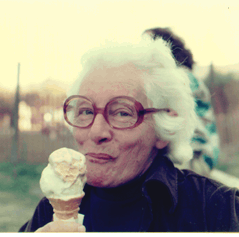
Malvina Reynolds was born Malvina Milder on August 23, 1900, to a Jewish socialist immigrant family in San Francisco, California. Her parents ran a tailor shop together and their home was filled with political discussion and meetings. Due to her parents’ opposition to the first World War, Lowell High School denied her a high school diploma, but her teachers at Lowell helped her get into the University of California at Berkeley anyway. There she earned both her Bachelor's and Master's degrees, and later, in 1938, her Ph.D. in Romance Philology. Jews and women had a harder time getting good jobs then than now, and throughout the Depression and following years Malvina was unable to find a college teaching position. She worked at this and that, in 1934 marrying carpenter and labor organizer William 'Bud' Reynolds and having a daughter in 1935. In the late forties (which were also her late forties) Bud and Malvina worked together on progressive political campaigns and she performed at folk music events in the Los Angeles area, along with Earl Robinson and other musicians active in Peoples’ Songs (whose Bulletin was a forerunner of Sing Out! magazine). She had been writing the occasional popular or political song since her late thirties; by her fifties, she had increased her output and added children’s songs to the mix. By the time the folk protest movements of the 1960s came along, she had honed her skills and was ready to take on the issues of the day: civil rights, opposition to the war in Vietnam, and the right of workers to organize. Overall she wrote hundreds of songs, some of great beauty and many displaying a sense of humor and wit that has endeared her to performers and listeners from Helsinki to Tokyo. Malvina Reynolds died on March 17, 1978, with gigs on her calendar.
Algunas canciones.
Buying the Package
Notes: words and music by Malvina Reynolds; copyright 1976 Schroder Music Company, renewed 2004.
Chorus:
You're buying the package,
You're buying the dream,
You pay for the ads
On the television screen,
They sell you a story,
They sell you a mood,
But what they don't deliver is food.
Colors, preservatives,
Poison or not.
Just so it sells
And is sure not to rot.
Colorings, additives,
Nothing is real,
No sensible maggot
Would call it a meal.
(Chorus)
Movie star glamour,
The ad man's display,
Pay at the check out
And take it away,
The package it comes in
More nourishing far
Than stuff in the box
Or the jar.
(Chorus)
The label it reads
Like an alchemist's dream,
You look at the contents
And what does it mean?
Profits for business
And nothing for you,
But sugar and grief,
And a wheat flake or two.
(Chorus)
Refined till its tasteless,
And taste added in,
The stockmarket rises,
Executives grin,
They'd never get rich
If you ate what you should,
There's profit in ads
So why bother with food?
(Chorus)
Movie star glamour
And slogans that stick,
What do they care
If the stuff makes you sick?
Big corporations
Have better to do
Than think of the health
Of the customer, too.
Back Alley Surgery
Notes: words and music by Malvina Reynolds; copyright 1978 Schroder Music Company, renewed 2006.
Supreme Court sits in Washington
Every one a mother's son.
Women's fate is lost and won
Behind that heavy door.
The justices preside in noble ease,
None of them ever suffers pregnancies,
So they hand out decisions such as these:
Back alley abortions for the poor.
Yes, back alley surgery kitchen knife solutions,
Wire hanger abortions for the poor.
Well-to-do people can manage well,
Anything they need they can buy and sell,
But the teenage drifter can walk in hell
Or roll on the back room floor.
And the battered children who bruise and bleed,
And the mother with too many kids to feed,
Pro-life offers them in their need
Back alley abortions for the poor.
Yes, back alley surgery kitchen knife solutions,
Wire hanger abortions for the poor.
Bitter Rain
Notes: words and music by Malvina Reynolds; copyright 1965 Schroder Music Company, renewed 1993.
The world's too much for me,
It's getting so
Too much needs doing here
That I can't do.
For me, it's not too bad,
I can't complain,
But somewhere a kid without a coat
Stands in the bitter rain.
The world's too much for me,
It's like the end,
Too many helpless ones
I can't defend.
I can protect myself
From cold and pain,
But somewhere a hungry kid
Walks in the bitter rain.
The world's too much for me
Although I've tried,
Too much goes on, too much
I can't abide.
The old give orders
And the young are slain,
And somewhere a bleeding kid
Dies in the bitter rain.
God Bless the Grass
Notes: words and music by Malvina Reynolds; copyright 1964 Schroder Music Company, renewed 1992. People often think of this as an ecology song, but Malvina wrote it after reading Mark Lane’s book, Rush to Judgment, about the Kennedy assassination.
God bless the grass that grows thru the crack.
They roll the concrete over it to try and keep it back.
The concrete gets tired of what it has to do,
It breaks and it buckles and the grass grows thru,
And God bless the grass.
God bless the truth that fights toward the sun,
They roll the lies over it and think that it is done.
It moves through the ground and reaches for the air,
And after a while it is growing everywhere,
And God bless the grass.
God bless the grass that grows through cement.
It's green and it's tender and it's easily bent.
But after a while it lifts up its head,
For the grass is living and the stone is dead,
And God bless the grass.
God bless the grass that's gentle and low,
Its roots they are deep and its will is to grow.
And God bless the truth, the friend of the poor,
And the wild grass growing at the poor man's door,
And God bless the grass.
Blood on the Grapes
Notes: words and music by Malvina Reynolds; copyright 1968 Schroder Music Company, renewed 1996. Written in support of the boycott of California grapes called for by Cesar Chavez and the United Farmworkers Organizing Committee in 1968.
Chorus:
There's blood on the grapes,
So we're not buying grapes this year.
They're pretty and sweet
But they're not fit to eat
'Cause there's blood on the grapes this year,
Blood on the grapes.
Do you know how the grape pickers live?
Do you know of their hot heavy loads?
When they turn to the union,
The thugs run them down on the roads.
Do you know of the starvation pay
For long grinding days in the sun.
And when they organize,
They are met with the club and the gun.
(Chorus)
The growers are lords on the land.
They rule over grape county law.
In the fields of our state,
There's no justice for workers at all.
The strikers are standing their ground,
The growers are brutal with fear,
And where I am concerned,
I am having no grapes this year.
Guerrillas in Guatemala
Notes: words and music by Malvina Reynolds; copyright 1965 Schroder Music Company, renewed 1993.
Did you cry when Jacob Arbenz was exiled from Guatemala?
When Castillo Armas destroyed the elected government in nineteen fifty four?
Do not mourn for Guatemala,
The guerrillas are still in the mountains.
I went with Augusto Loarca into the Sierra de las Minas,
Augusto Loarca, Lieutenant Colonel of the army of the democracy.
Then he became a leader
Of the Guatemalan Guerrillas.
He told how some of the army, defeated, went into the mountains,
When United Fruit and the Latafundistas destroyed the democracy.
The peasants asked Arbenz for guns,
But he was afraid, and denied them.
The farmers went back to their bitter land--it was an old story.
The Yankee company held seven hundred acres of the best plantation soil,
They tilled less than one tenth,
While the farmer had five rocky acres.
But do not mourn for Guatemala, prisoner of the Yankee Fruit Company,
Do not grieve for the country whose elected government was destroyed in 1954.
Do not mourn for Guatemala,
The Guerrillas are still in the mountains.
Nobody knows where they are, or when they are coming, the Guerrilla army,
They move like shadows through the forest, they are lost among the people in the hills.
Azurdia's troops rage in the village.
"The Guerrillas have been here! Where are they?"
"The Guerrillas? We have not seen them." But only last night was a meeting,
And today the troops arrest and torture, but no one will speak or answer.
Not even the children, who were there,
And the women also are silent.
United Fruit and the Latafundistas keep pushing their holdings,
They send their cattle to feed on the peasants' corn, they elbow them from their land.
In the village there is a trial.
They are trying the landholder's agent.
The landholder's agent is tried at the meeting, although he is absent.
The farmers are there, coming from miles with their children, their wives, their machetes.
The Guerrillas also are there,
The Guerrillas, the arm of the people.
Evidence is heard, the landholder's agent gets judgment and execution--
A shot that comes from the woods in the night from a Guerrilla rifle.
The farmer replants the land,
No agent is sent for replacement.
There are legends about the Guerrillas in Salvador and Guatemala.
Yon Sosa is washed in magic; no bullet can kill him, the rebel commander.
He can change his form at will.
His army grows by enchantment.
A sergeant of police tells the story to his men at night in the barracks.
"We had the house surrounded, they would not surrender in spite of the fire.
A black dog ran out and vanished.
That was their leader, Yon Sosa."
It is true that there is a magic that surrounds the Guerrilleros.
The comradeship of the peasants shields and protects them wherever they go.
They vanish among the people,
They march untouched through the forests.
The farmer will tear the boards from his hut for a fire to warm them,
He will feed them the best that he has, and shield them from danger.
For the Guerrillas are of the people,
And they are the arm of the people.
Do not mourn for Guatemala, do not mourn for Guatemala.
The organized Guerrilla army moves at will in the Sierras.
Their stronghold is Izabel Province.
Headquarters of the Yankee Fruit Company.
Henry Ford's Engine
Notes: words and music by Malvina Reynolds; copyright 1977 Schroder Music Company, renewed 2005.
Chorus:
Henry Ford's engine has to go.
Henry Ford's engine has to go.
It has us pulling up the black oil
That once was safely down below,
So Henry Ford's engine has to go.
We burn the gasoline, it kills the air,
We bring the crude stuff in from ev'rywhere,
The pipelines foul the tundra, and the tankers break at sea,
And Henry Ford's engine is the death of you and me.
(Chorus)
I have a proposal and it may seem strange,
I think that we could live with it once it was arranged,
We all could take to walking or we all could ride the train,
Or hitch up the horse and buggy and go driving down the lane.
Algunos poemas.
Untitled
Notes: by Malvina Reynolds; previously unpublished.
Here is the world,
I wish it were better for you,
Little friend.
I did my best, but there's not much
One fellow can do to amend it.
It's gotten too big, too many, too much,
With the scheme and the shout
And the elbows stuck out,
But there's still a wild acre or two
To run in, I guess,
If you can find it,
And a word from the stars
If you listen and mind it,
Small son.
There's a couple of things in your favor,
There's love to betray you to stay,
To linger,
There's youth for a while with a smile and a savor
Like apples and brandy and May.
So have what you can,
Little man,
And the hold of my finger.
Those shiny new eyes
Will see God knows what
Before you have grown to my size.
You'll think that the moon is an apple to pull from the skies,
But you'll have to settle for neon in bloom
Or an unshaded bulb in a tenement room--
It's been done,
Little son
Untitled
Notes: by Malvina Reynolds; previously unpublished.
Do not mistake me,
Though sometimes I complain,
You're dear to me as my own flesh,
But then,
Sometimes, like my flesh, you ache me,
And cause me pain.
Untitled
Notes: by Malvina Reynolds; previously unpublished.
Write lines, he says, and put them neatly by,
And in some future day,
People will find them,
And mind them,
After you die
And have been neatly put away.
http://www.wku.edu/~smithch/MALVINA/homep.htm
Suscribirse a:
Entradas (Atom)
